
Chlorantraniliprole 18.5% SC Insecticide Uses
-
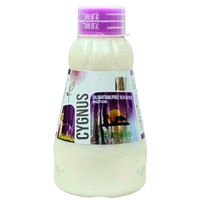 Cygnus Chlorantraniliprole 18.5% SC Insecticide
₹ 511.00
Cygnus Chlorantraniliprole 18.5% SC Insecticide
₹ 511.00
-
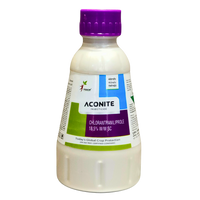 Aconite Chlorantraniliprole 18.5% SC Insecticide
₹ 320.00
Aconite Chlorantraniliprole 18.5% SC Insecticide
₹ 320.00
Currently none of our products with this technical are in stock. Please check back soon, or browse our full product range.
Chlorantraniliprole 18.5% SC is a CIB-registered insecticide from the anthranilic diamide class, used across cereals, cash crops, pulses, oilseeds and vegetables. This page lists its mode of action, key benefits and the complete crop-wise recommended dosage as per the approved label.
Which Problem Is This For? (Symptom Guide)
Not sure whether the pest damage in your field matches this insecticide's use case? This guide helps match field symptoms to the crop and pest this formulation is labelled for.
| Crop | Other Names | What You'll See in the Field |
|---|---|---|
| Rice | Stem borer ("tana chhedak"), Leaf folder ("patti modak"). | Dead central shoots ("dead hearts") in young plants or white, empty panicles ("whiteheads") at flowering (stem borer); leaves folded lengthwise and stuck together with silk, with white streaks where the pest has scraped the green tissue inside (leaf folder). |
| Cotton | Bollworm complex ("sundi"), including pink bollworm ("gulabi sundi"). | Small round holes bored into squares, flowers or bolls with larvae visible inside; shedding of damaged squares and bolls, and frass (excreta) near the entry hole. |
| Sugarcane | Early shoot borer ("tana chhedak"), Top borer ("agra tana chhedak"). | Dead hearts in young cane (central shoot dries and can be pulled out easily, with a rotten smell) for early shoot borer; drying of the top three to four leaves with bore holes near the growing point for top borer. |
Mode of Action
Chlorantraniliprole 18.5% SC belongs to the anthranilic diamide class of insecticides, with a novel mode of action that acts on insect ryanodine receptors. This activates the muscle ryanodine receptor, causing uncontrolled contraction and paralysis. While it has some contact activity, it is most effective through ingestion of treated plant material, so affected pests stop feeding within hours of exposure.
Features & Benefits
- Provides effective, long-duration protection with a unique mode of action in crops like paddy and sugarcane.
- Protects the rice crop from stem borer and leaf folder, and the sugarcane crop from early shoot borer and top borer.
- Activates the muscle ryanodine receptor, leading to contraction and paralysis in target pests.
- Prevents the build-up of pest populations and helps maximise crop yield potential.
Recommended Usage of Chlorantraniliprole 18.5% SC Insecticide
The table below gives the recommended dose, water volume and waiting period (PHI) per acre for each crop and target pest.
| Crop | Target Pest(s) | Dose per Acre | Water Volume per Acre | Waiting Period (PHI) |
|---|---|---|---|---|
| Rice | Stem borer, Leaf folder | 60 ml | ~200 L | 47 days |
| Cabbage | Diamond back moth | 20 ml | ~200 L | 3 days |
| Cotton | American bollworm, Spotted bollworm, Tobacco caterpillar | 60 ml | ~200 L | 9 days |
| Sugarcane | Termite | 200–250 ml | ~400 L | 208 days |
| Sugarcane | Early shoot borer, Top borer | 150 ml | ~400 L | 208 days |
| Tomato | Fruit borer | 60 ml | ~200 L | 3 days |
| Chilli | Fruit borer, Tobacco caterpillar | 60 ml | ~200 L | 3 days |
| Brinjal | Shoot & Fruit borer | 80 ml | ~200–300 L | 22 days |
| Pigeon Pea | Gram pod borer, Pod fly | 60 ml | ~200–300 L | 29 days |
| Soybean | Green semilooper, Stem fly, Girdle beetle, Tobacco caterpillar | 60 ml | ~200–300 L | 22 days |
| Bengal Gram | Pod borer | 50 ml | ~200 L | 11 days |
| Black Gram | Pod borer | 40 ml | ~200 L | 20 days |
| Bitter Gourd | Fruit & leaf borer/caterpillar | 40–50 ml | ~200 L | 7 days |
| Okra | Fruit borer | 50 ml | ~200 L | 5 days |
| Maize | Spotted stem borer, Pink stem borer, Fall army worm | 80 ml | ~200 L | 10 days |
| Groundnut | Tobacco caterpillar | 60 ml | ~200 L | 28 days |
| Green Gram | Pod borer complex (Helicoverpa armigera, Spodoptera litura, Maruca testulatis) | 50 ml | ~160–240 L | 14 days |
| Red Gram | Gram pod borer, Pod fly | 60 ml | ~200 L | 22 days |
Doses above are converted from the official CIB label rate, which is expressed per hectare (1 ha ≈ 2.47 acres). Always confirm against the product label/CIB registration before spraying, and follow your local agricultural extension advice.
How to Use
- Identify your crop and target pest in the table above, and note the recommended dose and water volume per acre.
- Add the measured dose to a sprayer tank that is partially filled with water, then top up to the required volume while stirring continuously.
- Apply as a uniform foliar spray using a knapsack or power sprayer, ensuring full coverage of the crop canopy.
- Spray during the early morning or late evening; avoid windy conditions or spraying before expected rainfall.
- Time the application to early pest infestation for the best results.
Precautions & Safety
- Wear protective gear (mask, gloves, full-sleeve clothing) while handling and spraying.
- Do not mix with strongly alkaline pesticides unless compatibility is confirmed.
- Keep away from children, food and livestock; store in a cool, dry place away from direct sunlight.
- Strictly observe the waiting period (pre-harvest interval) before harvesting the treated crop.
- Wash hands and exposed skin thoroughly after use.
Brand names mentioned on this page are registered trademarks of their respective owners and are mentioned here only for identification purposes; FarmMate is not affiliated with or endorsed by these brands. This page is for general information only — always consult your local agricultural extension office and confirm the current product label before use.
Explore other technical usage guides on FarmMate.in
Fertilizers8
Micronutrients10
Fungicides34
- Azoxystrobin 11% + Tebuconazole 18.3% SC
- Azoxystrobin 11.5% + Mancozeb 30% WP
- Azoxystrobin 18.2% + Difenoconazole 11.4% SC
- Azoxystrobin 23% SC
- Azoxystrobin 4.8% + Chlorothalonil 40% SC
- Captan 70% + Hexaconazole 5% WP
- Carbendazim 12% + Mancozeb 63% WP
- Carbendazim 46.27% SC
- Carbendazim 50% WP
- Copper Oxychloride 50% WP
- Cymoxanil 8% + Mancozeb 64% WP
- Hexaconazole 5% SC
- Isoprothiolane 40% EC
- Kasugamycin 3% SL
- Mancozeb 75% WP
- Metalaxyl 35% WS
- Metalaxyl 8% + Mancozeb 64% WP
- Propiconazole 13.9% + Difenoconazole 13.9% EC
- Propiconazole 25% EC
- Propineb 70% WP
- Streptomycin Sulphate 9% + Tetracycline Hydrochloride 1%
- Sulphur 80% WDG
- Tebuconazole 10% + Sulphur 65% WG
- Tebuconazole 2% DS
- Tebuconazole 25% WG
- Tebuconazole 25.9% EC
- Tebuconazole 38.39% SC
- Tebuconazole 50% + Trifloxystrobin 25% WG
- Tebuconazole 6.7% + Captan 26.9% SC
- Thifluzamide 24% SC
- Thiophanate Methyl 70% WP
- Tricyclazole 75% W.P.
- Validamycin 3% L
- Ziram 27% SC
Herbicides24
- 2,4-D Amine Salt 58% SL
- Atrazine 50% WP
- Bispyribac Sodium 10% SC
- Clodinafop Propargyl 15% WP
- Clodinafop Propargyl 9% + Metribuzin 20% WP
- Ethoxysulfuron 15% WDG
- Fenoxaprop-p-ethyl 9.3% EC
- Glufosinate Ammonium 13.5% SL
- Halosulfuron Methyl 75% WG
- Isoproturon 75% WP
- Mesotrione 2.27% + Atrazine 22.7% SC
- Metribuzin 70% WP
- Metsulfuron Methyl 20% WP
- Oxyfluorfen 23.5% EC
- Pendimethalin 30% EC
- Pendimethalin 38.7% CS
- Pinoxaden 5.1% EC
- Pretilachlor 37% EW
- Pretilachlor 50% EC
- Pyrazosulfuron Ethyl 10% WP
- Pyroxasulfone 85% WG
- Sulfosulfuron 75% + Metsulfuron Methyl 5% WG
- Sulfosulfuron 75% WG
- Tembotrione 34.4% SC
Insecticides38
- Acetamiprid 20% SP
- Bifenthrin 10% EC
- Buprofezin 25% SC
- Chlorantraniliprole 0.4% GR
- Chlorantraniliprole 35% WG
- Chlorantraniliprole 8.8% + Thiamethoxam 17.5% SC
- Chlorantraniliprole 9.3% + Lambda Cyhalothrin 4.6% ZC
- Chlorpyrifos 50% + Cypermethrin 5% EC
- Chlorpyriphos 20% EC
- Chlorpyriphos 50% EC
- Clothianidin 50% WG
- Dimethoate 30% EC
- Dinotefuran 15% + Pymetrozine 45% WG
- Dinotefuran 20% SG
- Emamectin Benzoate 1.5% + Fipronil 3.5% SC
- Emamectin Benzoate 1.9% EC
- Emamectin Benzoate 5% SG
- Fipronil 18.87% SC
- Fipronil 40% + Imidacloprid 40% WG
- Fipronil 5% SC
- Fipronil 80% WG
- Flonicamid 50% WG
- Imidacloprid 17.8% SL
- Imidacloprid 30.5% SC
- Imidacloprid 70% WG
- Lambda Cyhalothrin 10% WP
- Lambda Cyhalothrin 4.9% CS
- Lambda Cyhalothrin 5% EC
- Novaluron 5.25% + Indoxacarb 4.5% SC
- Permethrin 25% EC
- Profenofos 40% + Cypermethrin 4% EC
- Pymetrozine 50% WG
- Pyriproxyfen 10% EC
- Pyriproxyfen 5% + Diafenthiuron 25% SE
- Quinalphos 25% EC
- Thiamethoxam 12.6% + Lambda Cyhalothrin 9.5% ZC
- Thiamethoxam 25% WG
- Thiamethoxam 30% FS