
Sulphur 80% WDG Fungicide Uses
-
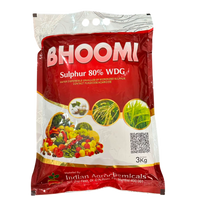 Bhoomi Sulphur 80% WDG Fungicide – Powdery Mildew & Scab Control
₹ 1,389.00
Bhoomi Sulphur 80% WDG Fungicide – Powdery Mildew & Scab Control
₹ 1,389.00
-
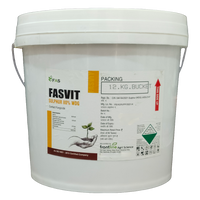 Fasvit - Sulphur 80% WDG Fungicide (12kg in Bucket)
₹ 2,195.00
Fasvit - Sulphur 80% WDG Fungicide (12kg in Bucket)
₹ 2,195.00
Currently none of our products with this technical are in stock. Please check back soon, or browse our full product range.
Sulphur 80% WDG is a multi-site, protectant, contact fungicide from the inorganic sulphur group, registered for use in India under the Insecticides Act, 1968, formulated as a water dispersible granule (WDG) for easy dispersion in the spray tank. It is registered for the control of powdery mildew and certain other fungal diseases across a wide range of field, fruit and vegetable crops, and it also has recognised acaricidal (mite-controlling) activity, making it useful where both fungal disease and mite pressure occur together. This page lists its mode of action, key benefits and the crop-wise recommended dosage as documented on the official TNAU Agritech portal and cross-checked against independent manufacturer labels.
Which Problem Is This For? (Symptom Guide)
Not sure whether what you're seeing in the field matches this fungicide's use case? This guide helps match symptoms to fungicides sold under brand names including Sultaf (Rallis/Tata).
| Crop | Other Names | What You'll See in the Field |
|---|---|---|
| Grapes / Apple | Powdery mildew ("bhabhutiya rog", भभूतिया रोग / चूर्णिल आसिता). | White to greyish, powdery fungal growth on leaves, shoots and berries/fruit; affected leaves may curl, turn yellow and drop early; berries develop a network of brown, russeted scarring and may crack open as they enlarge. |
| Groundnut | Tikka leaf spot (टिक्का रोग). | Small, circular, dark brown to black spots on the leaves, often surrounded by a pale yellow halo; in severe cases the affected leaves dry up and drop prematurely, well before normal crop maturity. |
| Chilli, Cotton, Vegetables | Red spider mite. | Fine yellow or white speckling (stippling) on the upper leaf surface where mites have fed; in heavy infestations, very fine silken webbing becomes visible on the underside of leaves, and affected leaves may turn a bronze/rust colour and drop. |
| Peas | Rust. | Small, raised, reddish-brown pustules scattered on leaves and pods, which release a rust-coloured powdery mass of spores when rubbed between the fingers. |
Mode of Action
Sulphur is a multi-site, protectant, contact fungicide with no systemic movement within the plant — it must physically coat the plant surface to be effective. On contact with humidity and the fungal spore or cell, it is slowly converted to hydrogen sulphide and other reactive sulphur compounds, which interfere with several different respiratory enzyme systems inside the fungal cell simultaneously, most notably disrupting the electron transport chain that the fungus needs to produce energy. This multi-site action prevents spore germination and mycelial growth before infection can become established in plant tissue, giving sulphur a strongly preventive (protectant) rather than curative role. Because sulphur disrupts many different biochemical targets inside the fungal cell rather than one specific site, fungal resistance to it remains very rare even after decades of continuous use worldwide — unlike many modern single-site fungicides. Separately, sulphur also has acaricidal (mite-killing) activity, acting as a contact poison and repellent against mites such as red spider mite, along with some mild activity against certain soft-bodied insect pests, though this is a secondary effect alongside its primary fungicidal use.
Features & Benefits
- Broad, multi-site protectant control of powdery mildew and rust across a wide range of field, fruit and vegetable crops, with an extremely low risk of the fungus developing resistance, even with repeated use over many seasons.
- Dual fungicide-plus-acaricide action — valuable on crops such as chilli, cotton and grapes that commonly face both powdery mildew and mite pressure in the same season.
- One of the oldest and most extensively used crop-protection inputs in agriculture, with a well-established, low-cost usage history and a favourable environmental and residue profile compared to many synthetic fungicides.
- The water dispersible granule (WDG) formulation disperses and suspends readily in the spray tank with far less airborne dust than older wettable powder (WP) formulations, making it easier and safer to handle and mix.
Recommended Usage of Sulphur 80% WDG Fungicide
The table below gives the recommended dose and water volume per acre for each crop, based on the official TNAU Agritech portal's disease-wise fungicide recommendations. Always spray in the recommended water volume for uniform coverage, and confirm against the current product label before use.
| Crop | Target Disease/Pest | Dose per Acre | Water Volume per Acre |
|---|---|---|---|
| Apple, Grapes | Powdery mildew | 750 g – 1 kg | 300–400 litres |
| Groundnut | Tikka leaf spot (Cercospora spp.) | 800 g – 1.6 kg | 300–400 litres |
| Peas | Rust | 750 g – 1 kg | 300–400 litres |
| Chillies, Okra (Bhindi) | Powdery mildew | 1.25 kg | 300–400 litres |
| Mango | Powdery mildew | 750 g – 1 kg | 300–400 litres |
| Citrus | Powdery mildew | 1 kg | 300–400 litres |
Doses above were originally converted from the official TNAU Agritech portal’s generic per-hectare sulphur rates, but have now been cross-checked against the Government of India’s official CIB & RC list of approved fungicide uses for this exact formulation, Sulphur 80% WG. The CIB list registers Sulphur 80% WG for Grapes, Apple, Mango and Peas (grouped with Cowpea and Guar) at 1.875–2.50 kg product/ha (≈ 750 g–1 kg/acre), and for Chilli at 3.13 kg product/ha (≈ 1.25 kg/acre) — this resolves the earlier source conflict largely in favour of the lower, Rallis/Tata-label-range dose rather than the higher TNAU-based figure, and the doses for Apple, Grapes, Peas, Chillies/Okra and Mango above have been updated accordingly. The CIB Sulphur 80% WG list does not separately cover Groundnut or Citrus, so those two rows still reflect the TNAU/manufacturer-label-based figure (2–4 kg/ha and 2.5 kg/ha respectively) pending confirmation for this specific granule formulation. The recommended water volume of 750–1000 litres/ha (≈ 300–400 litres/acre) is confirmed by the same CIB list. Always follow the dose printed on your specific product’s current label, and consult your local agricultural extension office if in doubt.
How to Use
- Identify your crop and target disease/pest from the table above, and confirm the correct dose per acre for your situation.
- Mix the required quantity of Sulphur 80% WDG into a small amount of water first to form a smooth slurry, then add this to the full spray tank volume while stirring or agitating continuously, so the granules disperse evenly and do not settle at the bottom of the tank.
- Spray to thoroughly and evenly cover all plant surfaces, including the undersides of leaves, since this is a protectant contact fungicide that must physically coat the plant to work — partial coverage gives only partial control.
- Do not spray sulphur when air temperature is high, generally above about 32–35°C, or in strong direct sunlight, as this significantly increases the risk of leaf scorch and phytotoxicity to the crop; spray during the cooler part of the day (early morning or late evening).
- Do not apply sulphur within 15–20 days of an oil-based spray (such as mineral/horticultural oil sprays used for pest control), in either direction, as the combination is a well-known cause of severe leaf burn and phytotoxicity.
- Repeat sprays at 10–15 day intervals if disease or mite pressure continues, or as advised by local agricultural extension, and rotate with fungicides of a different mode of action for diseases where resistance management is a concern.
Precautions & Safety
- Wear appropriate PPE — mask/respirator, gloves, goggles and full-sleeved clothing — while mixing and spraying, and avoid inhaling the fine granular dust while opening the pack.
- Never spray sulphur during hot weather (above roughly 32–35°C) or on a crop under moisture stress, as this significantly raises the risk of leaf and fruit scorch; spray in the cooler morning or evening hours instead.
- Avoid combining sulphur sprays with mineral or horticultural oil sprays within a 15–20 day window before or after, as this combination is a well-documented cause of severe phytotoxicity in many crops.
- Some crop varieties (particularly certain grape and cucurbit varieties) are known to be more sensitive to sulphur than others; if using on a crop or variety for the first time, consider a small test-patch spray before treating the whole field.
- Store in the original, tightly closed container in a cool, dry place away from direct sunlight, open flame and heat sources (sulphur dust is combustible in certain conditions), food and feed, and out of reach of children and livestock.
- Wash hands, face and any exposed skin thoroughly with soap and water after handling or spraying, and change out of contaminated clothing before eating, drinking or smoking.
Brand names mentioned on this page are registered trademarks of their respective owners and are referenced here for identification purposes only; FarmMate is not affiliated with or endorsed by these brands. This page is for general information only — always consult your local agricultural extension office and confirm the current product label before use.
Explore other technical usage guides on FarmMate.in
Fertilizers2
Fungicides21
- Azoxystrobin 11% + Tebuconazole 18.3% SC
- Azoxystrobin 18.2% + Difenoconazole 11.4% SC
- Captan 70% + Hexaconazole 5% WP
- Carbendazim 12% + Mancozeb 63% WP
- Carbendazim 46.27% SC
- Carbendazim 50% WP
- Copper Oxychloride 50% WP
- Hexaconazole 5% SC
- Isoprothiolane 40% EC
- Mancozeb 75% WP
- Metalaxyl 35% WS
- Propiconazole 25% EC
- Streptomycin Sulphate 9% + Tetracycline Hydrochloride 1%
- Tebuconazole 10% + Sulphur 65% WG
- Tebuconazole 25.9% EC
- Tebuconazole 50% + Trifloxystrobin 25% WG
- Tebuconazole 6.7% + Captan 26.9% SC
- Thiophanate Methyl 70% WP
- Tricyclazole 75% W.P.
- Validamycin 3% L
- Ziram 27% SC
Herbicides9
Insecticides15
- Bifenthrin 10% EC
- Chlorantraniliprole 18.5% SC
- Clothianidin 50% WG
- Dinotefuran 20% SG
- Emamectin Benzoate 5% SG
- Fipronil 40% + Imidacloprid 40% WG
- Fipronil 5% SC
- Imidacloprid 30.5% SC
- Lambda Cyhalothrin 5% EC
- Profenofos 40% + Cypermethrin 4% EC
- Pymetrozine 50% WG
- Pyriproxyfen 10% EC
- Thiamethoxam 12.6% + Lambda Cyhalothrin 9.5% ZC
- Thiamethoxam 25% WG
- Thiamethoxam 30% FS