
Bifenthrin 10% EC Insecticide Uses
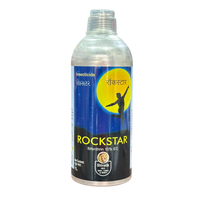
Currently none of our products with this technical are in stock. Please check back soon, or browse our full product range.
Bifenthrin 10% EC is a synthetic pyrethroid insecticide (IRAC Group 3A), registered for use in India under the Insecticides Act, 1968, formulated as an emulsifiable concentrate (EC). It is used as a foliar spray and, for termite control, as a soil application against a range of chewing and sucking insect pests in field crops including cotton, paddy and sugarcane. This page lists its mode of action, key benefits and the complete crop-wise recommended dosage as per the Central Insecticides Board & Registration Committee's (CIB&RC) official list of approved insecticide uses for this exact Bifenthrin 10% EC formulation, cross-checked against TNAU's recommendations and manufacturer/retailer labels.
Which Problem Is This For? (Symptom Guide)
Not sure whether what you're seeing in the field matches this insecticide's use case? This guide helps match pest damage symptoms to this insecticide's approved crop-wise uses.
| Crop | Other Names | What You'll See in the Field |
|---|---|---|
| Cotton | Bollworm ("sundi"; pink bollworm is "gulabi sundi"), Whitefly ("safed makkhi"). | Round entry holes in green bolls/squares with the boll interior hollowed out and stained (bollworm damage), often with "rosetted" or damaged flowers; alongside this, clusters of small white insects on the underside of leaves that fly up when the plant is disturbed, with leaves turning pale, sticky (honeydew) and sometimes developing black sooty mould (whitefly). |
| Paddy (Rice) | Stem borer ("tana chhedak"), Leaf folder, Green leaf hopper. | Central shoots that dry up and can be pulled out easily at the seedling/tillering stage ("dead heart"), or empty, chaffy earheads that turn white at the panicle stage ("white ear") — both caused by stem borer larvae tunnelling inside the stem; leaves rolled and folded lengthwise with white streaks from feeding inside (leaf folder); and small, wedge-shaped green hoppers on leaves and at the base of the plant (green leaf hopper), which also transmits tungro virus. |
| Sugarcane | Termites ("deemak"). | Setts that fail to germinate or shoots/canes that wilt and dry up, with the stem base hollowed out and often packed with mud, visible when the plant is pulled up — classic signs of termite ("deemak") damage below and at the soil line. |
Mode of Action
Bifenthrin belongs to the pyrethroid class of insecticides (IRAC Group 3A, sodium channel modulators). It acts on the insect's nervous system by keeping voltage-gated sodium channels in nerve cell membranes open for longer than normal, causing repeated, uncontrolled nerve firing. This leads to rapid knockdown, paralysis and death of the target insect. Bifenthrin acts through both contact action (absorbed through the insect's cuticle on direct spray contact) and stomach action (ingested when the insect feeds on treated leaf or stem surface), giving it activity against both chewing pests (such as bollworm and stem borer larvae) and sucking pests (such as whitefly and leafhoppers). It has no systemic movement within the plant, so thorough spray coverage of the crop canopy — including the underside of leaves, where sucking pests often shelter — is essential for good control.
Features & Benefits
- Broad-spectrum contact and stomach-poison activity against both chewing pests (bollworm, stem borer, leaf folder) and sucking pests (whitefly, leafhopper) in the same spray.
- Fast knockdown action on target insects due to its effect on the nerve sodium channel, giving visible pest reduction soon after spraying.
- Useful for below-ground termite control in sugarcane as a soil application at the base of the plant, in addition to its foliar insecticidal uses.
- Emulsifiable concentrate (EC) formulation that mixes readily with water for uniform tank application.
Recommended Usage of Bifenthrin 10% EC Insecticide
The table below gives the recommended dose and water volume per acre for each crop and target pest, based on the CIB&RC's official list of approved insecticide uses (Government of India) for this exact Bifenthrin 10% EC formulation — see the note below the table for the per-hectare conversion. These figures also agree closely with TNAU's recommendations and the general 200–400 ml/acre range quoted on multiple independent manufacturer/retailer labels for this formulation, cross-checked as secondary references. Always spray in the recommended water volume for uniform coverage, and confirm against the current product label before use.
| Crop | Target Pest(s) | Dose per Acre | Water Volume per Acre | Waiting Period (PHI) |
|---|---|---|---|---|
| Cotton | Bollworm, Whitefly | 320 ml | 200 litres | 15 days |
| Paddy (Rice) | Stem borer, Leaf folder, Green leaf hopper | 200 ml | 200 litres | 21 days |
| Sugarcane | Termites | 400 ml | 200 litres | 300 days |
Doses above are converted from the official rate published in the Government of India's CIB & RC (Central Insecticide Board & Registration Committee) approved-use list for this exact Bifenthrin 10% EC formulation, which states the rate in grams a.i./formulation per hectare; converted here to a practical per-acre spray-tank quantity (1 ha ≈ 2.47 acres) and rounded. These crop/pest combinations and dose figures also agree closely with TNAU's recommendations and multiple independent manufacturer/retailer product labels for this exact formulation, cross-checked as secondary references. For sugarcane termite control, the CIB&RC approved-use list specifies a 300-day waiting period; as a soil-applied treatment given at planting/early growth stage, this is well ahead of the sugarcane harvest (typically 10–12 months after planting) in normal practice, but always confirm the current product label and consult your local agricultural extension office before use.
How to Use
- Identify your crop and target pest from the table above, and confirm the correct dose per acre and water volume.
- Measure the required quantity of Bifenthrin 10% EC and mix it thoroughly into the spray tank water, agitating well before and during spraying so the emulsion stays evenly mixed.
- For foliar sprays (cotton, paddy), apply as a fine, uniform spray covering the entire crop canopy, including the undersides of leaves where sucking pests such as whitefly and leafhoppers typically shelter.
- For sugarcane termite control, apply as a soil drench around the base of the setts/plants rather than as a foliar spray, ensuring the treated zone is moist so the insecticide reaches the root zone.
- Spray during the early morning or late evening when pest activity and pollinator activity are both lower, and avoid spraying in hot, windy conditions or ahead of expected rain.
- Repeat only if pest pressure resumes, allowing at least 10–15 days between sprays, and do not exceed 2–3 applications per season on the same crop to help manage resistance.
Precautions & Safety
- Wear appropriate PPE — mask/respirator, gloves, goggles and full-sleeved clothing — while mixing and spraying.
- Bifenthrin is highly toxic to bees, fish and other aquatic life; do not spray during crop flowering when bees are foraging, and avoid any drift or runoff into ponds, canals or water bodies.
- Store in the original, tightly closed container in a cool, dry place away from direct sunlight, food and feed, and out of reach of children and livestock.
- Do not exceed the recommended dose or spray frequency; repeated, back-to-back use of the same insecticide class can lead to resistance development in target pest populations, so rotate with insecticides from a different mode-of-action (IRAC) group where possible.
- Respect the waiting period (PHI) given in the table above before harvesting the treated crop.
- Wash hands, face and any exposed skin thoroughly with soap and water after handling or spraying, and change out of contaminated clothing before eating, drinking or smoking.
Brand names mentioned on this page are registered trademarks of their respective owners and are referenced here for identification purposes only; FarmMate is not affiliated with or endorsed by these brands. This page is for general information only — always consult your local agricultural extension office and confirm the current product label before use.
Disclaimer
The dosage and usage information on this page is based on the Central Insecticides Board & Registration Committee (CIB&RC), Government of India, document "Major Uses of Pesticides" (registered under the Insecticides Act, 1968; updated up to 31.03.2026). As stated in that document, it has been compiled on the basis of available information for guidance and not for legal purposes. Likewise, this page is for general information and guidance only; it is not intended for any legal purpose and has no legal validity.
Before using any product, always read and follow the instructions on its label and leaflet. If in doubt, consult your local agricultural extension officer.
Explore other technical usage guides on FarmMate.in
Fertilizers9
Micronutrients10
Fungicides46
- Azoxystrobin 11% + Tebuconazole 18.3% SC
- Azoxystrobin 11.5% + Mancozeb 30% WP
- Azoxystrobin 18.2% + Cyproconazole 7.3% SC
- Azoxystrobin 18.2% + Difenoconazole 11.4% SC
- Azoxystrobin 23% SC
- Azoxystrobin 4.8% + Chlorothalonil 40% SC
- Azoxystrobin 8.3% + Mancozeb 66.7% WG
- Captan 70% + Hexaconazole 5% WP
- Captan 75% WP
- Carbendazim 12% + Mancozeb 63% WP
- Carbendazim 46.27% SC
- Carbendazim 50% WP
- Copper Oxychloride 50% WP
- Cymoxanil 8% + Mancozeb 64% WP
- Difenoconazole 25% EC
- Fluopyram 17.7% + Tebuconazole 17.7% SC
- Fluopyram 21.37% + Trifloxystrobin 21.37% SC
- Hexaconazole 5% EC
- Hexaconazole 5% SC
- Isoprothiolane 40% EC
- Kasugamycin 3% SL
- Kresoxim-methyl 44.3% SC
- Mancozeb 75% WP
- Metalaxyl 35% WS
- Metalaxyl 8% + Mancozeb 64% WP
- Metiram 55% + Pyraclostrobin 5% WG
- Metiram 70% WG
- Propiconazole 13.9% + Difenoconazole 13.9% EC
- Propiconazole 25% EC
- Propineb 70% WP
- Pyraclostrobin 20% WG
- Streptomycin Sulphate 9% + Tetracycline Hydrochloride 1%
- Sulphur 80% WDG
- Tebuconazole 10% + Sulphur 65% WG
- Tebuconazole 2% DS
- Tebuconazole 25% WG
- Tebuconazole 25.9% EC
- Tebuconazole 38.39% SC
- Tebuconazole 50% + Trifloxystrobin 25% WG
- Tebuconazole 6.7% + Captan 26.9% SC
- Thifluzamide 24% SC
- Thiophanate Methyl 70% WP
- Tricyclazole 75% W.P.
- Validamycin 3% L
- Zineb 75% WP
- Ziram 27% SC
Herbicides31
- 2,4-D Amine Salt 58% SL
- 2,4-D Ethyl Ester 38% EC
- Atrazine 50% WP
- Bispyribac Sodium 10% SC
- Clodinafop Propargyl 15% WP
- Clodinafop Propargyl 9% + Metribuzin 20% WP
- Cyhalofop Butyl 10% EC
- Ethoxysulfuron 15% WDG
- Fenoxaprop-p-ethyl 9.3% EC
- Glufosinate Ammonium 13.5% SL
- Glyphosate 41% SL
- Halosulfuron Methyl 75% WG
- Imazethapyr 10% SL
- Isoproturon 75% WP
- Mesotrione 2.27% + Atrazine 22.7% SC
- Metribuzin 70% WP
- Metsulfuron Methyl 10% + Chlorimuron Ethyl 10% WP
- Metsulfuron Methyl 20% WP
- Oxyfluorfen 23.5% EC
- Pendimethalin 30% EC
- Pendimethalin 38.7% CS
- Pinoxaden 5.1% EC
- Pretilachlor 37% EW
- Pretilachlor 50% EC
- Propaquizafop 10% EC
- Pyrazosulfuron Ethyl 10% WP
- Pyroxasulfone 85% WG
- Quizalofop-ethyl 5% EC
- Sulfosulfuron 75% + Metsulfuron Methyl 5% WG
- Sulfosulfuron 75% WG
- Tembotrione 34.4% SC
Insecticides64
- Acephate 75% SP
- Acetamiprid 20% SP
- Beta-cyfluthrin 8.49% + Imidacloprid 19.81% OD
- Broflanilide 20% SC
- Buprofezin 25% SC
- Cartap Hydrochloride 4% GR
- Cartap Hydrochloride 50% SP
- Chlorantraniliprole 0.4% GR
- Chlorantraniliprole 15% + Emamectin Benzoate 7.5% SC
- Chlorantraniliprole 18.5% SC
- Chlorantraniliprole 35% WG
- Chlorantraniliprole 8.8% + Thiamethoxam 17.5% SC
- Chlorantraniliprole 9.3% + Lambda Cyhalothrin 4.6% ZC
- Chlorfenapyr 10% SC
- Chlorpyrifos 50% + Cypermethrin 5% EC
- Chlorpyriphos 20% EC
- Chlorpyriphos 50% EC
- Clothianidin 50% WG
- Cyantraniliprole 10.26% OD
- Cypermethrin 10% EC
- Deltamethrin 2.8% EC
- Diafenthiuron 50% WP
- Dimethoate 30% EC
- Dinotefuran 15% + Pymetrozine 45% WG
- Dinotefuran 20% SG
- Emamectin Benzoate 1.5% + Fipronil 3.5% SC
- Emamectin Benzoate 1.9% EC
- Emamectin Benzoate 5% + Lufenuron 40% WG
- Emamectin Benzoate 5% SG
- Ethion 50% EC
- Fenpropathrin 30% EC
- Fipronil 0.3% GR
- Fipronil 18.87% SC
- Fipronil 40% + Imidacloprid 40% WG
- Fipronil 5% SC
- Fipronil 80% WG
- Flonicamid 50% WG
- Flubendiamide 39.35% SC
- Imidacloprid 17.8% SL
- Imidacloprid 30.5% SC
- Imidacloprid 70% WG
- Indoxacarb 14.5% SC
- Lambda Cyhalothrin 10% WP
- Lambda Cyhalothrin 4.9% CS
- Lambda Cyhalothrin 5% EC
- Novaluron 5.25% + Emamectin Benzoate 0.9% SC
- Novaluron 5.25% + Indoxacarb 4.5% SC
- Permethrin 25% EC
- Profenofos 40% + Cypermethrin 4% EC
- Profenofos 50% EC
- Pymetrozine 50% WG
- Pyridalyl 10% EC
- Pyriproxyfen 10% EC
- Pyriproxyfen 5% + Diafenthiuron 25% SE
- Quinalphos 25% EC
- Spinetoram 11.7% SC
- Spinosad 45% SC
- Spiromesifen 22.9% SC
- Spirotetramat 11.01% + Imidacloprid 11.01% SC
- Thiamethoxam 12.6% + Lambda Cyhalothrin 9.5% ZC
- Thiamethoxam 25% WG
- Thiamethoxam 30% FS
- Thiamethoxam 75% SG
- Thiodicarb 75% WP