
Thiophanate Methyl 70% WP Fungicide Uses
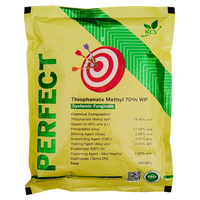
Currently none of our products with this technical are in stock. Please check back soon, or browse our full product range.
Thiophanate Methyl 70% WP is a systemic, broad-spectrum fungicide from the benzimidazole (thiophanate) chemical class, registered for use in India under the Insecticides Act, 1968. It carries label recommendations across cereals (paddy), cash crops (cotton), fruit crops (grapes, apple, papaya) and vegetables (tomato, bottle gourd/cucurbits), used as a foliar spray against blast, sheath blight/rot, scab, powdery mildew, anthracnose and fruit rot. Thiophanate methyl remains legally registered and sold in India; always confirm the current pack label before use. This page lists its mode of action, key benefits and the recommended crop-wise dosage as per manufacturer labels.
Which Problem Is This For? (Symptom Guide)
Not sure whether what you're seeing in the field matches this fungicide's use case? This guide helps match symptoms to this fungicide's approved crop-wise uses.
| Crop | Other Names | What You'll See in the Field |
|---|---|---|
| Paddy (Rice) | Blast, Sheath Blight ("jhonka rog"). | Spindle-shaped, grey-centred spots with brown margins on leaves; on the sheath near the waterline, irregular greyish-green lesions with brown borders enlarge and merge, weakening the stem and causing lodging. |
| Grapes | Powdery Mildew (churnil asita), Anthracnose. | White to greyish powdery fungal growth coating leaves, shoots and young berries (powdery mildew); small, dark, sunken spots with a raised rim on berries and shoots that can crack open in wet weather (anthracnose). |
| Apple | Scab. | Olive-green, velvety spots on leaves and young fruit that later turn dark brown and corky, cracking and deforming the fruit skin as it matures. |
| Cotton | Grey Mildew, Alternaria Leaf Spot. | Greyish, angular patches on the underside of lower leaves that later turn brown and papery (grey mildew); small, dark brown circular spots with concentric rings scattered across the leaf (Alternaria leaf spot). |
Mode of Action
Thiophanate methyl is a systemic fungicide that, once absorbed into the plant, is converted into carbendazim (a methyl benzimidazole carbamate, or MBC), which is the actual fungicidally active molecule. Carbendazim acts by binding to beta-tubulin, a structural protein needed to build the mitotic spindle during fungal cell division, which blocks fungal mitosis and halts the pathogen's growth and spread. Because thiophanate methyl is quickly absorbed and translocated within the plant's vascular system, it provides both a preventive barrier against new infection and a curative effect against early-stage infection already present in the tissue, and continues to protect new growth that emerges after spraying. As it shares its active breakdown product with carbendazim, it belongs to the same benzimidazole resistance-management group as carbendazim-based fungicides — see also Carbendazim 50% WP Fungicide Uses and Carbendazim 46.27% SC Fungicide Uses for reference.
Features & Benefits
- Broad-spectrum, systemic control of major fungal diseases — blast, sheath blight/rot, scab, powdery mildew, anthracnose and fruit/grain discolouration — across cereals, cotton, fruit and vegetable crops.
- Dual preventive and curative action, converting to carbendazim inside the plant for lasting disease suppression.
- Quick absorption and translocation gives extended protection of around 12–15 days per application in many crops.
- Versatile application methods — foliar spray, seed treatment, rhizome/tuber dip and soil drenching — depending on the crop and target disease.
Recommended Usage of Thiophanate Methyl 70% WP Fungicide
The table below gives the commonly recommended dose and water volume per acre for each crop and target disease, as listed on manufacturer labels for this active ingredient. Always spray in the recommended water volume for uniform coverage, and confirm against the current product label before use.
| Crop | Target Disease | Dose per Acre | Water Volume per Acre | Waiting Period (PHI) |
|---|---|---|---|---|
| Rice (Paddy) | Sheath Blight, Blast | 290 g | 200 litres | 35 days |
| Rice (Paddy) | Blast, Sheath Rot, Grain Discolouration | 460 g | 200 litres | 36 days |
| Cotton | Alternaria Leaf Spot, Grey Mildew | 300–400 g | 200 litres | 47 days |
| Grapes | Powdery Mildew, Anthracnose, Rust | 290 g | 300–400 litres | 7 days |
| Apple | Scab | 290 g | 300–400 litres | 3 days |
| Papaya | Powdery Mildew | 290 g | 300–400 litres | 4–8 days |
| Tomato | Ring Rot | 290 g | 300–400 litres | 7 days |
| Bottle Gourd | Anthracnose | 580 g | 300–400 litres | 1 day |
Doses above are the commonly listed formulation-label rates for Thiophanate Methyl 70% WP, rounded to practical spray-tank quantities. Always confirm the current pack label/CIB registration and consult your local agricultural extension office for the latest guidance before use and before harvest.
How to Use
- Identify your crop and target disease from the table above, and confirm the correct dose per acre for that crop.
- Make a thin paste of the required quantity of Thiophanate Methyl 70% WP in a small amount of water, then dilute this gradually into the full spray tank volume while stirring continuously so the wettable powder disperses evenly.
- Spray using a knapsack or power sprayer fitted with a flat-fan or hollow-cone nozzle for uniform leaf coverage, preferably during the early morning or late evening.
- Avoid spraying in hot, windy conditions or when rain is expected within a few hours, as this reduces efficacy and increases the risk of drift or wash-off.
- Repeat sprays at 10–15 day intervals if disease pressure continues, alternating with a fungicide from a different mode-of-action group (avoid rotating only with carbendazim/other benzimidazoles, since they share the same resistance group) to reduce the risk of resistance development, and always respect the waiting period before harvest.
Precautions & Safety
- Wear appropriate PPE — mask/respirator, gloves, goggles and full-sleeved clothing — while mixing and spraying, and avoid inhaling the wettable powder dust while opening the pack.
- Do a small jar-compatibility test before tank-mixing with other agrochemicals, and avoid mixing with strongly alkaline materials or copper-based fungicides.
- Store in the original, tightly closed container in a cool, dry place away from direct sunlight, food, feed and out of reach of children and livestock.
- Because thiophanate methyl converts to carbendazim in the plant, resistance risk and management practices are shared with carbendazim/benzimidazole-group fungicides; avoid repeated, back-to-back applications on the same crop/disease and rotate with a fungicide from a genuinely different mode-of-action group.
- Respect the waiting period (PHI) listed for each crop above before harvesting, and follow your local agricultural extension advice for the latest guidance.
- Wash hands, face and any exposed skin thoroughly with soap and water after handling or spraying, and change out of contaminated clothing before eating, drinking or smoking.
Brand names mentioned on this page are registered trademarks of their respective owners and are referenced here for identification purposes only; FarmMate is not affiliated with or endorsed by these brands. This page is for general information only — always consult your local agricultural extension office and confirm the current product label before use.
Disclaimer
The dosage and usage information on this page is based on the Central Insecticides Board & Registration Committee (CIB&RC), Government of India, document "Major Uses of Pesticides" (registered under the Insecticides Act, 1968; updated up to 31.03.2026). As stated in that document, it has been compiled on the basis of available information for guidance and not for legal purposes. Likewise, this page is for general information and guidance only; it is not intended for any legal purpose and has no legal validity.
Before using any product, always read and follow the instructions on its label and leaflet. If in doubt, consult your local agricultural extension officer.
Explore other technical usage guides on FarmMate.in
Fertilizers9
Micronutrients10
Fungicides45
- Azoxystrobin 11% + Tebuconazole 18.3% SC
- Azoxystrobin 11.5% + Mancozeb 30% WP
- Azoxystrobin 18.2% + Cyproconazole 7.3% SC
- Azoxystrobin 18.2% + Difenoconazole 11.4% SC
- Azoxystrobin 23% SC
- Azoxystrobin 4.8% + Chlorothalonil 40% SC
- Azoxystrobin 8.3% + Mancozeb 66.7% WG
- Captan 70% + Hexaconazole 5% WP
- Captan 75% WP
- Carbendazim 12% + Mancozeb 63% WP
- Carbendazim 46.27% SC
- Carbendazim 50% WP
- Copper Oxychloride 50% WP
- Cymoxanil 8% + Mancozeb 64% WP
- Difenoconazole 25% EC
- Fluopyram 17.7% + Tebuconazole 17.7% SC
- Fluopyram 21.37% + Trifloxystrobin 21.37% SC
- Hexaconazole 5% EC
- Hexaconazole 5% SC
- Isoprothiolane 40% EC
- Kasugamycin 3% SL
- Kresoxim-methyl 44.3% SC
- Mancozeb 75% WP
- Metalaxyl 35% WS
- Metalaxyl 8% + Mancozeb 64% WP
- Metiram 55% + Pyraclostrobin 5% WG
- Metiram 70% WG
- Propiconazole 13.9% + Difenoconazole 13.9% EC
- Propiconazole 25% EC
- Propineb 70% WP
- Pyraclostrobin 20% WG
- Streptomycin Sulphate 9% + Tetracycline Hydrochloride 1%
- Sulphur 80% WDG
- Tebuconazole 10% + Sulphur 65% WG
- Tebuconazole 2% DS
- Tebuconazole 25% WG
- Tebuconazole 25.9% EC
- Tebuconazole 38.39% SC
- Tebuconazole 50% + Trifloxystrobin 25% WG
- Tebuconazole 6.7% + Captan 26.9% SC
- Thifluzamide 24% SC
- Tricyclazole 75% W.P.
- Validamycin 3% L
- Zineb 75% WP
- Ziram 27% SC
Herbicides31
- 2,4-D Amine Salt 58% SL
- 2,4-D Ethyl Ester 38% EC
- Atrazine 50% WP
- Bispyribac Sodium 10% SC
- Clodinafop Propargyl 15% WP
- Clodinafop Propargyl 9% + Metribuzin 20% WP
- Cyhalofop Butyl 10% EC
- Ethoxysulfuron 15% WDG
- Fenoxaprop-p-ethyl 9.3% EC
- Glufosinate Ammonium 13.5% SL
- Glyphosate 41% SL
- Halosulfuron Methyl 75% WG
- Imazethapyr 10% SL
- Isoproturon 75% WP
- Mesotrione 2.27% + Atrazine 22.7% SC
- Metribuzin 70% WP
- Metsulfuron Methyl 10% + Chlorimuron Ethyl 10% WP
- Metsulfuron Methyl 20% WP
- Oxyfluorfen 23.5% EC
- Pendimethalin 30% EC
- Pendimethalin 38.7% CS
- Pinoxaden 5.1% EC
- Pretilachlor 37% EW
- Pretilachlor 50% EC
- Propaquizafop 10% EC
- Pyrazosulfuron Ethyl 10% WP
- Pyroxasulfone 85% WG
- Quizalofop-ethyl 5% EC
- Sulfosulfuron 75% + Metsulfuron Methyl 5% WG
- Sulfosulfuron 75% WG
- Tembotrione 34.4% SC
Insecticides65
- Acephate 75% SP
- Acetamiprid 20% SP
- Beta-cyfluthrin 8.49% + Imidacloprid 19.81% OD
- Bifenthrin 10% EC
- Broflanilide 20% SC
- Buprofezin 25% SC
- Cartap Hydrochloride 4% GR
- Cartap Hydrochloride 50% SP
- Chlorantraniliprole 0.4% GR
- Chlorantraniliprole 15% + Emamectin Benzoate 7.5% SC
- Chlorantraniliprole 18.5% SC
- Chlorantraniliprole 35% WG
- Chlorantraniliprole 8.8% + Thiamethoxam 17.5% SC
- Chlorantraniliprole 9.3% + Lambda Cyhalothrin 4.6% ZC
- Chlorfenapyr 10% SC
- Chlorpyrifos 50% + Cypermethrin 5% EC
- Chlorpyriphos 20% EC
- Chlorpyriphos 50% EC
- Clothianidin 50% WG
- Cyantraniliprole 10.26% OD
- Cypermethrin 10% EC
- Deltamethrin 2.8% EC
- Diafenthiuron 50% WP
- Dimethoate 30% EC
- Dinotefuran 15% + Pymetrozine 45% WG
- Dinotefuran 20% SG
- Emamectin Benzoate 1.5% + Fipronil 3.5% SC
- Emamectin Benzoate 1.9% EC
- Emamectin Benzoate 5% + Lufenuron 40% WG
- Emamectin Benzoate 5% SG
- Ethion 50% EC
- Fenpropathrin 30% EC
- Fipronil 0.3% GR
- Fipronil 18.87% SC
- Fipronil 40% + Imidacloprid 40% WG
- Fipronil 5% SC
- Fipronil 80% WG
- Flonicamid 50% WG
- Flubendiamide 39.35% SC
- Imidacloprid 17.8% SL
- Imidacloprid 30.5% SC
- Imidacloprid 70% WG
- Indoxacarb 14.5% SC
- Lambda Cyhalothrin 10% WP
- Lambda Cyhalothrin 4.9% CS
- Lambda Cyhalothrin 5% EC
- Novaluron 5.25% + Emamectin Benzoate 0.9% SC
- Novaluron 5.25% + Indoxacarb 4.5% SC
- Permethrin 25% EC
- Profenofos 40% + Cypermethrin 4% EC
- Profenofos 50% EC
- Pymetrozine 50% WG
- Pyridalyl 10% EC
- Pyriproxyfen 10% EC
- Pyriproxyfen 5% + Diafenthiuron 25% SE
- Quinalphos 25% EC
- Spinetoram 11.7% SC
- Spinosad 45% SC
- Spiromesifen 22.9% SC
- Spirotetramat 11.01% + Imidacloprid 11.01% SC
- Thiamethoxam 12.6% + Lambda Cyhalothrin 9.5% ZC
- Thiamethoxam 25% WG
- Thiamethoxam 30% FS
- Thiamethoxam 75% SG
- Thiodicarb 75% WP