
Mesotrione 2.27% + Atrazine 22.7% SC Herbicide Uses
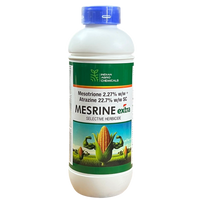
Currently none of our products with this technical are in stock. Please check back soon, or browse our full product range.
Mesotrione 2.27% + Atrazine 22.7% SC is a combination, dual-action herbicide registered for use in India under the Insecticides Act, 1968. It pairs an HPPD-inhibitor (mesotrione) with a photosynthesis-inhibiting triazine (atrazine), and is applied as a post-emergence spray in maize and sugarcane against a wide range of grassy and broadleaf weeds. This combination remains legally registered and sold in India; always confirm the current pack label before use. This page lists its mode of action, key benefits and the recommended crop-wise dosage as per manufacturer labels.
Which Weeds Does This Control? (Field Identification Guide)
Not sure which weed is troubling your maize or sugarcane field? This guide matches the common name farmers use to the grassy and broadleaf weeds that mesotrione + atrazine combination herbicides are commonly used to control in these crops.
| Crop | Weed (Common Name) | How to Recognise It |
|---|---|---|
| Maize | Trianthema portulacastrum — commonly called “बिशखपरा” (Bishkhapra) by farmers. | Prostrate, fleshy-leaved broadleaf weed that spreads flat across the soil surface in wide mats; thick, succulent stems and leaves distinguish it from grasses, and it competes aggressively for moisture in the early crop stage. |
| Maize / Sugarcane | Cyperus rotundus — commonly called “मोथा” (Motha / Nagarmotha) by farmers. | Sedge with a distinctive triangular (three-sided) stem and glossy, grass-like leaves; spreads via underground tubers (nutlets) that make it notoriously hard to eradicate by hand-weeding alone. |
| Sugarcane | Echinochloa colona (Jungle Rice). | Clumping grass weed resembling a small rice plant, with smooth, hairless leaf blades and a reddish-purple tinge at the base; germinates in flushes after rain and competes heavily with young cane for nutrients. |
| Maize / Sugarcane | Dactyloctenium aegyptium — commonly called “मकरा” (Makra) by farmers. | Low, spreading grass weed with finger-like seed spikes radiating from a single point at the stem tip, resembling a bird’s foot or crow’s foot; common on lighter, well-drained soils. |
Mode of Action
This product combines two herbicides with different, complementary modes of action. Mesotrione inhibits the enzyme 4-hydroxyphenylpyruvate dioxygenase (HPPD), which is required for carotenoid pigment synthesis in the weed; without carotenoids to protect chlorophyll from light-driven breakdown, treated weeds develop a characteristic bleaching/whitening of new growth followed by tissue death. Atrazine is a triazine herbicide that inhibits photosynthesis by blocking electron transport at Photosystem II, stopping the weed from producing usable energy. Because the two actives disrupt separate, unrelated processes in the weed, the combination gives broad-spectrum post-emergence control of grasses and broadleaf weeds with some residual soil activity, while reducing the resistance risk compared to repeated use of either active alone.
Features & Benefits
- Dual mode of action (HPPD inhibitor + Photosystem II inhibitor) broadens the weed spectrum and reduces resistance risk compared to either active used alone.
- Effective post-emergence control of major maize and sugarcane weeds including Trianthema, Cyperus, Digitaria, Echinochloa and Dactyloctenium species.
- Long-lasting residual soil activity helps suppress subsequent flushes of weed germination after spraying.
- Visible bleaching/yellowing symptom on treated weeds within days gives early confirmation that the spray has worked.
Recommended Usage of Mesotrione 2.27% + Atrazine 22.7% SC Herbicide
The table below gives the commonly recommended dose and water volume per acre for each crop, as listed on manufacturer labels for this active ingredient combination. Always confirm against the current product label before use, including the correct crop growth stage for application.
| Crop | Target Weeds | Dose per Acre | Water Volume per Acre | Waiting Period (PHI) |
|---|---|---|---|---|
| Maize | Horse Purslane, Nut Sedge, Crabgrass, Barnyard Grass, Jungle Rice, Trianthema spp., Cyperus spp., Digitaria sanguinalis, Echinochloa spp., Dactyloctenium aegyptium | 1400 ml | 200 litres | 42 days |
| Sugarcane | Trianthema spp., Amaranthus viridis, Echinochloa colona, Cyperus rotundus, Digitaria spp., Dactyloctenium aegyptium | 1400 ml | 200 litres | 190 days |
Doses above are the commonly listed formulation-label rates for Mesotrione 2.27% + Atrazine 22.7% SC, applied as a post-emergence spray once the crop and weeds have reached the labelled stage. Always confirm the current pack label/CIB registration and consult your local agricultural extension office for the latest guidance.
How to Use
- Identify your crop and confirm the correct dose per acre and the correct post-emergence timing from the current product label.
- Pre-mix the required quantity in a small amount of water, then dilute this gradually into the full spray tank volume while stirring continuously so the suspension concentrate mixes evenly.
- Spray using a knapsack or power sprayer fitted with a flat-fan nozzle for uniform coverage of weed foliage, ensuring weeds are actively growing and not under moisture stress at the time of spraying.
- Avoid spray drift onto neighbouring broadleaf crops, as this combination can cause serious injury to sensitive, non-target crops.
- Follow any rotational-crop restrictions listed on the label before planting a different, sensitive crop in the same field after treatment, since atrazine can carry residual soil activity.
Precautions & Safety
- Wear appropriate PPE — mask/respirator, gloves, goggles and full-sleeved clothing — while mixing and spraying.
- Apply only in the labelled crops (maize, sugarcane) and only at the correct growth stage; drift or runoff onto sensitive broadleaf crops or vegetable plots can cause severe injury.
- Store in the original, tightly closed container in a cool, dry place away from direct sunlight, food, feed and out of reach of children and livestock.
- Follow your local agricultural extension advice on rotational-crop restrictions before planting a different, sensitive crop in the same field the following season.
- Avoid repeated, back-to-back use of the same herbicide combination on the same field across seasons; rotate with herbicides from different mode-of-action groups as part of a resistance-management program.
- Wash hands, face and any exposed skin thoroughly with soap and water after handling or spraying, and change out of contaminated clothing before eating, drinking or smoking.
Brand names mentioned on this page are registered trademarks of their respective owners and are referenced here for identification purposes only; FarmMate is not affiliated with or endorsed by these brands. This page is for general information only — always consult your local agricultural extension office and confirm the current product label before use.
Disclaimer
The dosage and usage information on this page is based on the Central Insecticides Board & Registration Committee (CIB&RC), Government of India, document "Major Uses of Pesticides" (registered under the Insecticides Act, 1968; updated up to 31.03.2026). As stated in that document, it has been compiled on the basis of available information for guidance and not for legal purposes. Likewise, this page is for general information and guidance only; it is not intended for any legal purpose and has no legal validity.
Before using any product, always read and follow the instructions on its label and leaflet. If in doubt, consult your local agricultural extension officer.
Explore other technical usage guides on FarmMate.in
Fertilizers9
Micronutrients10
Fungicides46
- Azoxystrobin 11% + Tebuconazole 18.3% SC
- Azoxystrobin 11.5% + Mancozeb 30% WP
- Azoxystrobin 18.2% + Cyproconazole 7.3% SC
- Azoxystrobin 18.2% + Difenoconazole 11.4% SC
- Azoxystrobin 23% SC
- Azoxystrobin 4.8% + Chlorothalonil 40% SC
- Azoxystrobin 8.3% + Mancozeb 66.7% WG
- Captan 70% + Hexaconazole 5% WP
- Captan 75% WP
- Carbendazim 12% + Mancozeb 63% WP
- Carbendazim 46.27% SC
- Carbendazim 50% WP
- Copper Oxychloride 50% WP
- Cymoxanil 8% + Mancozeb 64% WP
- Difenoconazole 25% EC
- Fluopyram 17.7% + Tebuconazole 17.7% SC
- Fluopyram 21.37% + Trifloxystrobin 21.37% SC
- Hexaconazole 5% EC
- Hexaconazole 5% SC
- Isoprothiolane 40% EC
- Kasugamycin 3% SL
- Kresoxim-methyl 44.3% SC
- Mancozeb 75% WP
- Metalaxyl 35% WS
- Metalaxyl 8% + Mancozeb 64% WP
- Metiram 55% + Pyraclostrobin 5% WG
- Metiram 70% WG
- Propiconazole 13.9% + Difenoconazole 13.9% EC
- Propiconazole 25% EC
- Propineb 70% WP
- Pyraclostrobin 20% WG
- Streptomycin Sulphate 9% + Tetracycline Hydrochloride 1%
- Sulphur 80% WDG
- Tebuconazole 10% + Sulphur 65% WG
- Tebuconazole 2% DS
- Tebuconazole 25% WG
- Tebuconazole 25.9% EC
- Tebuconazole 38.39% SC
- Tebuconazole 50% + Trifloxystrobin 25% WG
- Tebuconazole 6.7% + Captan 26.9% SC
- Thifluzamide 24% SC
- Thiophanate Methyl 70% WP
- Tricyclazole 75% W.P.
- Validamycin 3% L
- Zineb 75% WP
- Ziram 27% SC
Herbicides30
- 2,4-D Amine Salt 58% SL
- 2,4-D Ethyl Ester 38% EC
- Atrazine 50% WP
- Bispyribac Sodium 10% SC
- Clodinafop Propargyl 15% WP
- Clodinafop Propargyl 9% + Metribuzin 20% WP
- Cyhalofop Butyl 10% EC
- Ethoxysulfuron 15% WDG
- Fenoxaprop-p-ethyl 9.3% EC
- Glufosinate Ammonium 13.5% SL
- Glyphosate 41% SL
- Halosulfuron Methyl 75% WG
- Imazethapyr 10% SL
- Isoproturon 75% WP
- Metribuzin 70% WP
- Metsulfuron Methyl 10% + Chlorimuron Ethyl 10% WP
- Metsulfuron Methyl 20% WP
- Oxyfluorfen 23.5% EC
- Pendimethalin 30% EC
- Pendimethalin 38.7% CS
- Pinoxaden 5.1% EC
- Pretilachlor 37% EW
- Pretilachlor 50% EC
- Propaquizafop 10% EC
- Pyrazosulfuron Ethyl 10% WP
- Pyroxasulfone 85% WG
- Quizalofop-ethyl 5% EC
- Sulfosulfuron 75% + Metsulfuron Methyl 5% WG
- Sulfosulfuron 75% WG
- Tembotrione 34.4% SC
Insecticides65
- Acephate 75% SP
- Acetamiprid 20% SP
- Beta-cyfluthrin 8.49% + Imidacloprid 19.81% OD
- Bifenthrin 10% EC
- Broflanilide 20% SC
- Buprofezin 25% SC
- Cartap Hydrochloride 4% GR
- Cartap Hydrochloride 50% SP
- Chlorantraniliprole 0.4% GR
- Chlorantraniliprole 15% + Emamectin Benzoate 7.5% SC
- Chlorantraniliprole 18.5% SC
- Chlorantraniliprole 35% WG
- Chlorantraniliprole 8.8% + Thiamethoxam 17.5% SC
- Chlorantraniliprole 9.3% + Lambda Cyhalothrin 4.6% ZC
- Chlorfenapyr 10% SC
- Chlorpyrifos 50% + Cypermethrin 5% EC
- Chlorpyriphos 20% EC
- Chlorpyriphos 50% EC
- Clothianidin 50% WG
- Cyantraniliprole 10.26% OD
- Cypermethrin 10% EC
- Deltamethrin 2.8% EC
- Diafenthiuron 50% WP
- Dimethoate 30% EC
- Dinotefuran 15% + Pymetrozine 45% WG
- Dinotefuran 20% SG
- Emamectin Benzoate 1.5% + Fipronil 3.5% SC
- Emamectin Benzoate 1.9% EC
- Emamectin Benzoate 5% + Lufenuron 40% WG
- Emamectin Benzoate 5% SG
- Ethion 50% EC
- Fenpropathrin 30% EC
- Fipronil 0.3% GR
- Fipronil 18.87% SC
- Fipronil 40% + Imidacloprid 40% WG
- Fipronil 5% SC
- Fipronil 80% WG
- Flonicamid 50% WG
- Flubendiamide 39.35% SC
- Imidacloprid 17.8% SL
- Imidacloprid 30.5% SC
- Imidacloprid 70% WG
- Indoxacarb 14.5% SC
- Lambda Cyhalothrin 10% WP
- Lambda Cyhalothrin 4.9% CS
- Lambda Cyhalothrin 5% EC
- Novaluron 5.25% + Emamectin Benzoate 0.9% SC
- Novaluron 5.25% + Indoxacarb 4.5% SC
- Permethrin 25% EC
- Profenofos 40% + Cypermethrin 4% EC
- Profenofos 50% EC
- Pymetrozine 50% WG
- Pyridalyl 10% EC
- Pyriproxyfen 10% EC
- Pyriproxyfen 5% + Diafenthiuron 25% SE
- Quinalphos 25% EC
- Spinetoram 11.7% SC
- Spinosad 45% SC
- Spiromesifen 22.9% SC
- Spirotetramat 11.01% + Imidacloprid 11.01% SC
- Thiamethoxam 12.6% + Lambda Cyhalothrin 9.5% ZC
- Thiamethoxam 25% WG
- Thiamethoxam 30% FS
- Thiamethoxam 75% SG
- Thiodicarb 75% WP