
Pretilachlor 37% EW Herbicide Uses
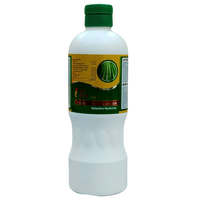
Currently none of our products with this technical are in stock. Please check back soon, or browse our full product range.
Pretilachlor 37% EW is a selective, pre-emergence herbicide from the chloroacetanilide group, registered for use in India under the Insecticides Act, 1968. Formulated as an emulsion (EW), it is applied to standing water shortly after transplanting rice, where it forms a treatment layer that acts on weed seeds as they germinate. This page lists its mode of action, key benefits and the recommended crop-wise dosage as per CIB-registered labels.
Which Weeds Does This Control? (Field Identification Guide)
Not sure whether the weeds coming up in your transplanted rice field are the ones this herbicide is meant to control? This guide helps you identify the grasses, sedges and broadleaf weeds it targets so you can confirm before spraying.
| Crop | Weed (Common Name) | How to Recognise It |
|---|---|---|
| Transplanted Rice | Echinochloa crus-galli / Echinochloa colonum — commonly called "सांवक" (Sanwak) by farmers, or barnyard grass / jungle rice | Closely mimics young rice, especially in the nursery; stems are hairless and often reddish-purple at the base, the leaf lacks the small membrane (ligule) rice seedlings have at the leaf-stem junction, and it tillers heavily, soon overtopping the crop if left uncontrolled. |
| Transplanted Rice | Cyperus iria / Cyperus difformis — commonly called "मोथा" (Motha) by farmers, or nut grass / sedges | Grass-like sedge with a distinctly triangular stem (not round) when rolled between the fingers; grows in tufts from the base and carries umbrella-like clusters of small brownish spikelets at the top of the stem. |
| Transplanted Rice | Digitaria sanguinalis — large crab grass | Low, spreading grass that roots wherever its lower stems touch moist soil, giving a crab-like, radiating growth habit; leaf blades are soft with fine hairs, and the seed head carries several finger-like spikes radiating from one point. |
| Transplanted Rice | Fimbristylis miliacea — known as Hoora grass | Small, densely tufted sedge with very thin, wiry, three-angled stems and tiny clustered brownish flower heads; easy to mistake for young Cyperus but has noticeably finer foliage. |
| Transplanted Rice | Eclipta alba — commonly called "भृंगराज" (Bhringraj) by farmers, or false daisy | Low, spreading broadleaf weed with narrow, rough-textured, paired leaves and small white daisy-like flower heads; stems root easily wherever a node touches moist soil. |
| Transplanted Rice | Ludwigia parviflora — commonly called "बनलौंग" (Ban Long) by farmers, or water primrose | Broadleaf weed of standing-water fields with narrow, lance-shaped leaves and small four-petalled yellow flowers close to the leaf joints; stems are often reddish and somewhat fleshy. |
| Transplanted Rice | Monochoria vaginalis — oval-leaf pondweed | Broadleaf weed with glossy, heart-to-oval shaped leaves on long stalks rising from the base, and small violet-blue flower spikes; easily mistaken for a young aquatic ornamental if the field is not scouted early. |
Mode of Action
Pretilachlor belongs to the chloroacetanilide group of herbicides (an inhibitor of very-long-chain fatty acid synthesis). It does not act on weeds that have already emerged; instead, it is absorbed by the coleoptile and young shoot tissue of grass and sedge seeds as they germinate in the treated soil-water layer, blocking cell division and elongation at these growing points. Affected weed seedlings fail to emerge properly, or die shortly after, while transplanted rice — whose root system is already established below the treated zone at the time of application — largely escapes injury at the labelled dose. Because it works on germinating weeds rather than established ones, correct timing shortly after transplanting, and maintaining a standing water layer afterward, are both critical for good control.
Features & Benefits
- Pre-emergence, soil/water-acting control that stops weeds before they compete with young transplanted rice for nutrients, light and space.
- Effective against a broad spectrum of grasses (Echinochloa spp., Digitaria sanguinalis), sedges (Cyperus spp., Fimbristylis miliacea) and several broadleaf weeds (Eclipta alba, Ludwigia parviflora, Monochoria vaginalis) common in transplanted rice.
- Water-emulsifiable (EW) formulation for straightforward tank-mixing and uniform application with standard spray equipment.
- A single, well-timed application shortly after transplanting can reduce the need for repeated early-season hand-weeding.
Recommended Usage of Pretilachlor 37% EW Herbicide
The table below gives the CIB-registered dose, water volume, timing and waiting period per acre for transplanted rice, converted from the official per-hectare rate (1 hectare ≈ 2.47 acres). Always confirm against the current product label before use.
| Crop | Target Weeds | Dose per Acre | Water Volume | Application Timing | Waiting Period (PHI) |
|---|---|---|---|---|---|
| Transplanted Rice | Echinochloa crus-galli, Echinochloa colonum, Cyperus difformis, Cyperus iria, Digitaria sanguinalis, Fimbristylis miliacea, Eclipta alba, Ludwigia parviflora, Monochoria vaginalis | ≈243–304 g a.i. (≈605–760 ml formulation) | ≈200–205 litres | Pre-emergence, shortly after transplanting, into standing water | 90 days |
Doses above are converted from the CIB-registered per-hectare rate (0.60–0.75 kg a.i./ha; 1.5–1.875 litres formulation/ha; 500 litres water/ha) for Pretilachlor 37% EW in transplanted rice. Always confirm the current pack label/CIB registration and consult your local agricultural extension office before use and before harvest.
How to Use
- Apply shortly after transplanting, once the field has a thin layer of standing water, so the herbicide settles into a uniform layer at the soil-water interface where weed seeds are germinating.
- Mix the required quantity of Pretilachlor 37% EW thoroughly into the spray tank, or apply as directed on the current label for sand/granule-mixed broadcast application if offered for this formulation.
- Apply uniformly across the field, working backward so you do not walk through the just-treated area.
- Avoid draining treated water out of the field for at least 3–4 days after application, so the herbicide layer is not washed away before it can act on germinating weeds.
- Maintain a thin, standing water layer in the field for several days after application, since pretilachlor's activity depends on this water layer carrying it to germinating weed seeds.
- Do not use on direct-seeded or newly germinating rice unless specifically permitted on the current label, since young rice without an established root system can also be affected.
Precautions & Safety
- Wear appropriate PPE — mask, gloves, goggles and full-sleeved clothing — while mixing and applying.
- Apply only at the correct crop stage (shortly after transplanting) and dose given above; early or excess application can stunt young rice seedlings.
- Maintain the recommended standing water depth after application; premature drainage or field overflow reduces weed control and can move the herbicide off-field.
- Store in the original, tightly closed container in a cool, dry place away from direct sunlight, food, feed and out of reach of children and livestock.
- Respect the 90-day waiting period (PHI) before harvest and follow your local agricultural extension advice for the latest guidance.
- Wash hands, face and any exposed skin thoroughly with soap and water after handling or spraying, and change out of contaminated clothing before eating, drinking or smoking.
Brand names mentioned on this page are registered trademarks of their respective owners and are referenced here for identification purposes only; FarmMate is not affiliated with or endorsed by these brands. This page is for general information only — always consult your local agricultural extension office and confirm the current product label before use.
Explore other technical usage guides on FarmMate.in
Fertilizers2
Fungicides22
- Azoxystrobin 11% + Tebuconazole 18.3% SC
- Azoxystrobin 18.2% + Difenoconazole 11.4% SC
- Captan 70% + Hexaconazole 5% WP
- Carbendazim 12% + Mancozeb 63% WP
- Carbendazim 46.27% SC
- Carbendazim 50% WP
- Copper Oxychloride 50% WP
- Hexaconazole 5% SC
- Isoprothiolane 40% EC
- Mancozeb 75% WP
- Metalaxyl 35% WS
- Propiconazole 25% EC
- Streptomycin Sulphate 9% + Tetracycline Hydrochloride 1%
- Sulphur 80% WDG
- Tebuconazole 10% + Sulphur 65% WG
- Tebuconazole 25.9% EC
- Tebuconazole 50% + Trifloxystrobin 25% WG
- Tebuconazole 6.7% + Captan 26.9% SC
- Thiophanate Methyl 70% WP
- Tricyclazole 75% W.P.
- Validamycin 3% L
- Ziram 27% SC
Herbicides14
- 2,4-D Amine Salt 58% SL
- Bispyribac Sodium 10% SC
- Clodinafop Propargyl 15% WP
- Ethoxysulfuron 15% WDG
- Glufosinate Ammonium 13.5% SL
- Isoproturon 75% WP
- Mesotrione 2.27% + Atrazine 22.7% SC
- Metribuzin 70% WP
- Metsulfuron Methyl 20% WP
- Pendimethalin 30% EC
- Pendimethalin 38.7% CS
- Pinoxaden 5.1% EC
- Pretilachlor 50% EC
- Pyrazosulfuron Ethyl 10% WP
Insecticides21
- Acetamiprid 20% SP
- Bifenthrin 10% EC
- Buprofezin 25% SC
- Chlorantraniliprole 18.5% SC
- Chlorpyriphos 20% EC
- Chlorpyriphos 50% EC
- Clothianidin 50% WG
- Dinotefuran 20% SG
- Emamectin Benzoate 1.9% EC
- Emamectin Benzoate 5% SG
- Fipronil 40% + Imidacloprid 40% WG
- Fipronil 5% SC
- Imidacloprid 30.5% SC
- Imidacloprid 70% WG
- Lambda Cyhalothrin 5% EC
- Profenofos 40% + Cypermethrin 4% EC
- Pymetrozine 50% WG
- Pyriproxyfen 10% EC
- Thiamethoxam 12.6% + Lambda Cyhalothrin 9.5% ZC
- Thiamethoxam 25% WG
- Thiamethoxam 30% FS