
Ascophyllum Nodosum 15% Biostimulant Uses
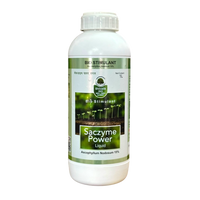
Currently none of our products with this technical are in stock. Please check back soon, or browse our full product range.
Ascophyllum Nodosum 15% is a liquid biostimulant derived from natural brown seaweed (Ascophyllum nodosum), registered as a fertilizer input under the Fertilizer (Control) Order, 1985 (FCO). Rather than supplying major nutrients directly, it works by improving nutrient and moisture uptake, root development and the crop's natural tolerance to everyday stress. This page presents crop-wise foliar spray guidance drawn from the product's own FCO label specification for Green Gram, supplemented with general agricultural-extension guidance for seaweed-based biostimulants in other major crops, since fertilizers/biostimulants are governed by the FCO rather than the Central Insecticides Board (CIB).
Which Growth Problem Is This For?
As a biostimulant, this product is generally used to support overall crop vigour and resilience rather than to correct one specific deficiency. The table below lists the common growth situations where it is typically applied.
| Crop / Situation | What You'll See in the Field |
|---|---|
| Weak or slow root establishment | Poor early crop vigour after sowing/transplanting, shallow root system, uneven crop stand |
| Reduced nutrient/moisture uptake | Pale or dull green foliage despite normal fertilization, slow recovery after irrigation gaps |
| Stress-prone growth stages (flowering, fruit/pod development) | Flower or pod/fruit drop under mild heat or moisture stress, uneven pod/fruit set, reduced fruit or seed size |
| General low plant vigour | Slower-than-normal vegetative growth, reduced foliage greenness, lower overall crop uniformity |
Mode of Action
Ascophyllum nodosum seaweed extract contains natural plant growth-promoting substances along with alginic acid, mannitol and organic carbon compounds. It is understood to stimulate root growth and branching, improving the root system's ability to take up water and nutrients from the soil. Applied as a foliar spray, it is absorbed through the leaf surface and is understood to support chlorophyll retention and overall plant vigour, helping the crop maintain healthier green foliage. Seaweed-based biostimulants are also understood to help plants better tolerate everyday environmental stress such as heat and moisture fluctuation, particularly around sensitive growth stages like flowering and fruit or pod development, and to support a favourable environment for beneficial soil microorganisms.
Features & Benefits
- Seaweed-based biostimulant derived from natural Ascophyllum nodosum.
- Supports healthy root development and improves nutrient and moisture uptake.
- Helps maintain healthy green foliage and overall plant vigour.
- Supports the crop's natural tolerance to everyday environmental stress.
- Contributes to a favourable environment for beneficial soil microorganisms.
- Broadly compatible with most fertilizers and pesticides (always confirm compatibility before tank-mixing).
Recommended Usage of Ascophyllum Nodosum 15% Biostimulant
The table below gives the foliar spray dose for Green Gram as specified on the product's own FCO label, along with general foliar spray guidance for other major crops based on commonly followed agricultural-extension recommendations for seaweed-based biostimulants.
| Crop | Application Method | Dosage per Acre | Timing |
|---|---|---|---|
| Green Gram* | Foliar spray — 2 applications | 600 ml/acre per application | First spray at vegetative stage, second at flowering/pod-development stage |
| Wheat | Foliar spray | Approx. 500–600 ml/acre in 150–200 L water | Tillering stage, with a repeat spray at grain-filling stage if needed |
| Cotton | Foliar spray | Approx. 500–600 ml/acre in 150–200 L water | Squaring stage and again at boll-development stage |
| Vegetables (general) | Foliar spray | Approx. 500–600 ml/acre in 150–200 L water | Vegetative growth stage and again at flowering/fruit-set stage |
| Fruit crops (general) | Foliar spray | Approx. 500–600 ml/acre in 200 L water | New-flush/flowering stage and again at fruit-development stage |
*The Green Gram dose is as specified on the product's own FCO 1985 label. Doses for wheat, cotton, vegetables and fruit crops are general foliar spray rates commonly followed for Ascophyllum nodosum-based seaweed biostimulants under agricultural-extension guidance, extrapolated from the product's own labelled application rate for other crops — they are not specific figures from the FCO label or from CIB. Always confirm the current pack label and your local PAU Krishi Vigyan Kendra's advisory before use, and adjust the spray timing to your crop's own growth-stage calendar.
How to Use
- Shake the container well before use, and dilute the required quantity fully in the specified quantity of clean water.
- Spray using a knapsack or power sprayer fitted with a fine nozzle for uniform coverage of the crop foliage.
- Time the sprays to key growth stages — early vegetative growth and again around flowering/fruit or pod development — for the best response.
- Spray during the cooler part of the day (early morning or evening) to reduce evaporation and improve absorption.
- If tank-mixing with a fertilizer or pesticide, do a small jar-compatibility test first to confirm the products mix cleanly.
Precautions & Safety
- Wear basic protective clothing and gloves while mixing and spraying, as a routine precaution for any agricultural input.
- Avoid spraying during peak heat or bright sunshine to reduce the risk of leaf scorch and improve uptake.
- Store in the original, tightly closed container in a cool, dry place away from direct sunlight, and out of reach of children and livestock.
- Being a non-toxic, naturally derived biostimulant, it is generally considered safe for use across a wide range of crops when used at the recommended dilution.
- Use as a complement to, not a replacement for, your crop's regular fertilization program.
- Wash hands, face and any exposed skin thoroughly with soap and water after handling or spraying.
This page is for general information only — the Green Gram dose is based on the product's own FCO 1985 label specification, and doses for other crops are based on general agricultural-extension guidance for seaweed-based biostimulants, not a crop-specific FCO or CIB listing. Always consult your local agricultural extension office (PAU Krishi Vigyan Kendra) and confirm the current product label before use.
Explore other technical usage guides on FarmMate.in
Fertilizers7
Micronutrients10
Fungicides34
- Azoxystrobin 11% + Tebuconazole 18.3% SC
- Azoxystrobin 18.2% + Difenoconazole 11.4% SC
- Azoxystrobin 23% SC
- Azoxystrobin 11.5% + Mancozeb 30% WP
- Azoxystrobin 4.8% + Chlorothalonil 40% SC
- Captan 70% + Hexaconazole 5% WP
- Carbendazim 12% + Mancozeb 63% WP
- Carbendazim 46.27% SC
- Carbendazim 50% WP
- Copper Oxychloride 50% WP
- Cymoxanil 8% + Mancozeb 64% WP
- Hexaconazole 5% SC
- Isoprothiolane 40% EC
- Mancozeb 75% WP
- Metalaxyl 35% WS
- Metalaxyl 8% + Mancozeb 64% WP
- Propiconazole 25% EC
- Propineb 70% WP
- Streptomycin Sulphate 9% + Tetracycline Hydrochloride 1%
- Sulphur 80% WDG
- Tebuconazole 10% + Sulphur 65% WG
- Tebuconazole 25.9% EC
- Tebuconazole 25% WG
- Tebuconazole 2% DS
- Tebuconazole 50% + Trifloxystrobin 25% WG
- Tebuconazole 6.7% + Captan 26.9% SC
- Thifluzamide 24% SC
- Tebuconazole 38.39% SC
- Thiophanate Methyl 70% WP
- Tricyclazole 75% W.P.
- Validamycin 3% L
- Ziram 27% SC
- Propiconazole 13.9% + Difenoconazole 13.9% EC
- Kasugamycin 3% SL
Herbicides24
- 2,4-D Amine Salt 58% SL
- Bispyribac Sodium 10% SC
- Clodinafop Propargyl 15% WP
- Ethoxysulfuron 15% WDG
- Glufosinate Ammonium 13.5% SL
- Isoproturon 75% WP
- Mesotrione 2.27% + Atrazine 22.7% SC
- Metribuzin 70% WP
- Metsulfuron Methyl 20% WP
- Pendimethalin 30% EC
- Pendimethalin 38.7% CS
- Pinoxaden 5.1% EC
- Pretilachlor 37% EW
- Pretilachlor 50% EC
- Pyrazosulfuron Ethyl 10% WP
- Atrazine 50% WP
- Clodinafop Propargyl 9% + Metribuzin 20% WP
- Fenoxaprop-p-ethyl 9.3% EC
- Halosulfuron Methyl 75% WG
- Oxyfluorfen 23.5% EC
- Pyroxasulfone 85% WG
- Sulfosulfuron 75% WG
- Sulfosulfuron 75% + Metsulfuron Methyl 5% WG
- Tembotrione 34.4% SC
Insecticides39
- Acetamiprid 20% SP
- Bifenthrin 10% EC
- Buprofezin 25% SC
- Chlorantraniliprole 0.4% GR
- Chlorantraniliprole 35% WG
- Chlorantraniliprole 8.8% + Thiamethoxam 17.5% SC
- Chlorantraniliprole 9.3% + Lambda Cyhalothrin 4.6% ZC
- Chlorpyrifos 50% + Cypermethrin 5% EC
- Chlorpyriphos 20% EC
- Chlorpyriphos 50% EC
- Clothianidin 50% WG
- Dimethoate 30% EC
- Dinotefuran 15% + Pymetrozine 45% WG
- Dinotefuran 20% SG
- Emamectin Benzoate 1.5% + Fipronil 3.5% SC
- Emamectin Benzoate 1.9% EC
- Emamectin Benzoate 5% SG
- Fipronil 18.87% SC
- Fipronil 40% + Imidacloprid 40% WG
- Fipronil 5% SC
- Fipronil 80% WG
- Flonicamid 50% WG
- Imidacloprid 17.8% SL
- Imidacloprid 30.5% SC
- Imidacloprid 70% WG
- Lambda Cyhalothrin 10% WP
- Lambda Cyhalothrin 4.9% CS
- Lambda Cyhalothrin 5% EC
- Novaluron 5.25% + Indoxacarb 4.5% SC
- Permethrin 25% EC
- Profenofos 40% + Cypermethrin 4% EC
- Pymetrozine 50% WG
- Pyriproxyfen 10% EC
- Pyriproxyfen 5% + Diafenthiuron 25% SE
- Quinalphos 25% EC
- Chlorantraniliprole 18.5% SC
- Thiamethoxam 12.6% + Lambda Cyhalothrin 9.5% ZC
- Thiamethoxam 25% WG
- Thiamethoxam 30% FS