
Manganese Sulphate – Uses, Dosage & Application
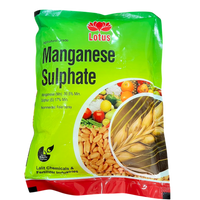
Currently none of our products with this technical are in stock. Please check back soon, or browse our full product range.
Manganese Sulphate is a water-soluble micronutrient fertilizer registered for use in India under the Fertilizer (Control) Order, 1985 (FCO) — a plant-nutrition product, not a crop-protection one. Manganese is essential for photosynthesis (it activates the water-splitting enzyme complex) and for several other enzyme systems, and its deficiency shows up mainly as interveinal chlorosis with characteristic grey or brown speck-like lesions on cereal leaves. Dosage guidance on this page draws on Punjab Agricultural University (PAU) Package of Practices and Tamil Nadu Agricultural University (TNAU) extension recommendations for manganese correction in wheat, read alongside the product's own FCO label application rate.
Which Deficiency Symptom Is This For? (Symptom Guide)
Not sure whether what you're seeing in the field is manganese deficiency? This guide helps match the visible symptom to the crop before deciding on a spray.
| Crop | Other Names | What You'll See in the Field |
|---|---|---|
| Wheat | Grey speck disease. | Grey to brownish speck-like spots on leaves, slightly lighter green than normal foliage overall; affected leaves can droop and drop from the base in severe cases, most common on light, sandy, high-pH soils. |
| Paddy (Rice) | Interveinal chlorosis. | Pale yellow-green streaking between veins on younger leaves, with small brownish specks appearing as the deficiency progresses; growth is slowed but plants rarely die outright. |
| Sugarcane | Interveinal chlorosis / mottling. | Narrow chlorotic (yellowish) streaks running parallel to the veins on younger leaves, giving a striped appearance; leaves can become thin and the overall stand looks pale. |
| Citrus | Mottle leaf. | Irregular blotchy yellow-green mottling between veins on the leaf, most visible on younger flush leaves; distinct from the more uniform interveinal chlorosis of iron deficiency. |
| Soybean | Interveinal chlorosis. | Yellowing between veins on younger trifoliate leaves while the veins remain green, similar in appearance to iron deficiency but generally less severe and without leaf-margin scorch. |
Mode of Action
Manganese is a cofactor for the oxygen-evolving complex in photosystem II, the enzyme system that splits water during photosynthesis, and it also activates enzymes involved in respiration and nitrogen metabolism. Because manganese availability in soil drops sharply as soil pH rises, deficiency is most common on light-textured, calcareous or over-limed soils, and can also appear on poorly drained, waterlogged soils where manganese is oxidised into an unavailable form. As a water-soluble sulphate salt, manganese sulphate is readily absorbed by leaves in a foliar spray, giving a faster correction than relying on soil availability, and is also used as a soil application on confirmed-deficient fields.
Features & Benefits
- Water-soluble manganese source suited to both foliar spray and soil application for correcting confirmed deficiency.
- Corrects grey speck disease in wheat, mottle leaf in citrus and interveinal chlorosis in paddy, sugarcane and soybean.
- Supports the photosynthesis enzyme system directly, giving a visible improvement in leaf colour and vigour once corrected.
- Useful on light, sandy or high-pH/calcareous soils where manganese deficiency is most likely to occur.
- Compatible with most common fertilizers and crop-protection products in a tank mix (a jar-compatibility test is still recommended before mixing).
Recommended Usage of Manganese Sulphate Fertilizer
University extension guidance for manganese correction in wheat recommends a foliar spray at a fixed percentage concentration rather than a per-acre quantity, since manganese sulphate is dosed by spray-solution strength; the same approach is used across the other crops below, following the same general percentage range recommended for manganese sulphate foliar correction, alongside a soil application option for confirmed-deficient fields.
| Crop | Recommended Dose | Water Volume | Application Timing/Method |
|---|---|---|---|
| Wheat | 0.2% solution (2 g per litre) foliar spray, or 10–12.5 kg/acre* soil application on confirmed-deficient fields | As a fine foliar spray to full coverage | At first sign of grey speck symptoms (tillering stage), repeated after 15–20 days if symptoms persist |
| Paddy (Rice) | 0.5% solution (5 g per litre) foliar spray | As a fine foliar spray to full coverage | Two sprays 15 days apart, starting 3–4 weeks after transplanting on affected patches |
| Sugarcane | 0.5% solution (5 g per litre) foliar spray | As a fine foliar spray to full coverage | During the tillering/grand growth phase, 2 sprays 15–20 days apart |
| Citrus | 0.3–0.5% solution (3–5 g per litre) foliar spray | As a fine foliar spray to full coverage of new flush | At each new leaf flush showing mottling, repeated 15–20 days later if needed |
| Soybean | 0.5% solution (5 g per litre) foliar spray | As a fine foliar spray to full coverage | At first trifoliate-leaf yellowing, repeated after 10–15 days if symptoms persist |
*The soil-application figure for wheat is converted from a per-hectare basal-dose figure (1 ha ≈ 2.47 acres) for confirmed-deficient fields, and is used only where soil manganese status has been confirmed low; foliar doses above are expressed as a percentage/concentration rather than a per-acre quantity, since foliar micronutrient sprays are dosed by spray-solution strength, not land area. Always confirm the current product label before use and consult your local agricultural extension office for soil-test-based recommendations.
How to Use
- Confirm manganese deficiency symptoms against the Symptom Guide above, and where possible get a soil test done through your local Krishi Vigyan Kendra (KVK) before deciding between foliar and soil application.
- Dissolve the required quantity of Manganese Sulphate fully in a small amount of water first, then add it to the spray tank and top up to the required volume while stirring.
- Spray using a knapsack or power sprayer fitted with a flat-fan or fine mist nozzle, ensuring uniform coverage of both leaf surfaces.
- Spray during the early morning or late evening to reduce evaporation and improve leaf uptake; avoid spraying in strong sunlight or just before rain.
- Repeat the spray after 15–20 days if deficiency symptoms persist in new growth, following the crop-wise schedule in the table above.
Precautions & Safety
- Wear basic protective clothing and gloves while mixing and spraying, as a routine precaution for any agricultural input.
- Do not exceed the recommended concentration — spraying manganese at a higher-than-labelled concentration can cause leaf scorch rather than faster correction.
- Avoid tank-mixing with strongly alkaline products without a jar-compatibility test, since manganese availability and stability in solution can be affected by pH.
- Store in the original, tightly closed container in a cool, dry place away from direct sunlight, food, feed and out of reach of children and livestock.
- This fertilizer is a supplement to, not a replacement for, balanced soil fertilization — follow your local agricultural extension advice on fitting it into your overall soil-nutrition programme.
- Wash hands, face and any exposed skin thoroughly with soap and water after handling or spraying.
Brand names mentioned on this page are registered trademarks of their respective owners and are referenced here for identification purposes only; FarmMate is not affiliated with or endorsed by these brands. This page is for general information only — always consult your local agricultural extension office and confirm the current product label before use.
Explore other technical usage guides on FarmMate.in
Fertilizers8
Micronutrients9
Fungicides34
- Azoxystrobin 11% + Tebuconazole 18.3% SC
- Azoxystrobin 18.2% + Difenoconazole 11.4% SC
- Azoxystrobin 23% SC
- Azoxystrobin 11.5% + Mancozeb 30% WP
- Azoxystrobin 4.8% + Chlorothalonil 40% SC
- Captan 70% + Hexaconazole 5% WP
- Carbendazim 12% + Mancozeb 63% WP
- Carbendazim 46.27% SC
- Carbendazim 50% WP
- Copper Oxychloride 50% WP
- Cymoxanil 8% + Mancozeb 64% WP
- Hexaconazole 5% SC
- Isoprothiolane 40% EC
- Mancozeb 75% WP
- Metalaxyl 35% WS
- Metalaxyl 8% + Mancozeb 64% WP
- Propiconazole 25% EC
- Propineb 70% WP
- Streptomycin Sulphate 9% + Tetracycline Hydrochloride 1%
- Sulphur 80% WDG
- Tebuconazole 10% + Sulphur 65% WG
- Tebuconazole 25.9% EC
- Tebuconazole 25% WG
- Tebuconazole 2% DS
- Tebuconazole 50% + Trifloxystrobin 25% WG
- Tebuconazole 6.7% + Captan 26.9% SC
- Thifluzamide 24% SC
- Tebuconazole 38.39% SC
- Thiophanate Methyl 70% WP
- Tricyclazole 75% W.P.
- Validamycin 3% L
- Ziram 27% SC
- Propiconazole 13.9% + Difenoconazole 13.9% EC
- Kasugamycin 3% SL
Herbicides24
- 2,4-D Amine Salt 58% SL
- Bispyribac Sodium 10% SC
- Clodinafop Propargyl 15% WP
- Ethoxysulfuron 15% WDG
- Glufosinate Ammonium 13.5% SL
- Isoproturon 75% WP
- Mesotrione 2.27% + Atrazine 22.7% SC
- Metribuzin 70% WP
- Metsulfuron Methyl 20% WP
- Pendimethalin 30% EC
- Pendimethalin 38.7% CS
- Pinoxaden 5.1% EC
- Pretilachlor 37% EW
- Pretilachlor 50% EC
- Pyrazosulfuron Ethyl 10% WP
- Atrazine 50% WP
- Clodinafop Propargyl 9% + Metribuzin 20% WP
- Fenoxaprop-p-ethyl 9.3% EC
- Halosulfuron Methyl 75% WG
- Oxyfluorfen 23.5% EC
- Pyroxasulfone 85% WG
- Sulfosulfuron 75% WG
- Sulfosulfuron 75% + Metsulfuron Methyl 5% WG
- Tembotrione 34.4% SC
Insecticides39
- Acetamiprid 20% SP
- Bifenthrin 10% EC
- Buprofezin 25% SC
- Chlorantraniliprole 0.4% GR
- Chlorantraniliprole 35% WG
- Chlorantraniliprole 8.8% + Thiamethoxam 17.5% SC
- Chlorantraniliprole 9.3% + Lambda Cyhalothrin 4.6% ZC
- Chlorpyrifos 50% + Cypermethrin 5% EC
- Chlorpyriphos 20% EC
- Chlorpyriphos 50% EC
- Clothianidin 50% WG
- Dimethoate 30% EC
- Dinotefuran 15% + Pymetrozine 45% WG
- Dinotefuran 20% SG
- Emamectin Benzoate 1.5% + Fipronil 3.5% SC
- Emamectin Benzoate 1.9% EC
- Emamectin Benzoate 5% SG
- Fipronil 18.87% SC
- Fipronil 40% + Imidacloprid 40% WG
- Fipronil 5% SC
- Fipronil 80% WG
- Flonicamid 50% WG
- Imidacloprid 17.8% SL
- Imidacloprid 30.5% SC
- Imidacloprid 70% WG
- Lambda Cyhalothrin 10% WP
- Lambda Cyhalothrin 4.9% CS
- Lambda Cyhalothrin 5% EC
- Novaluron 5.25% + Indoxacarb 4.5% SC
- Permethrin 25% EC
- Profenofos 40% + Cypermethrin 4% EC
- Pymetrozine 50% WG
- Pyriproxyfen 10% EC
- Pyriproxyfen 5% + Diafenthiuron 25% SE
- Quinalphos 25% EC
- Chlorantraniliprole 18.5% SC
- Thiamethoxam 12.6% + Lambda Cyhalothrin 9.5% ZC
- Thiamethoxam 25% WG
- Thiamethoxam 30% FS